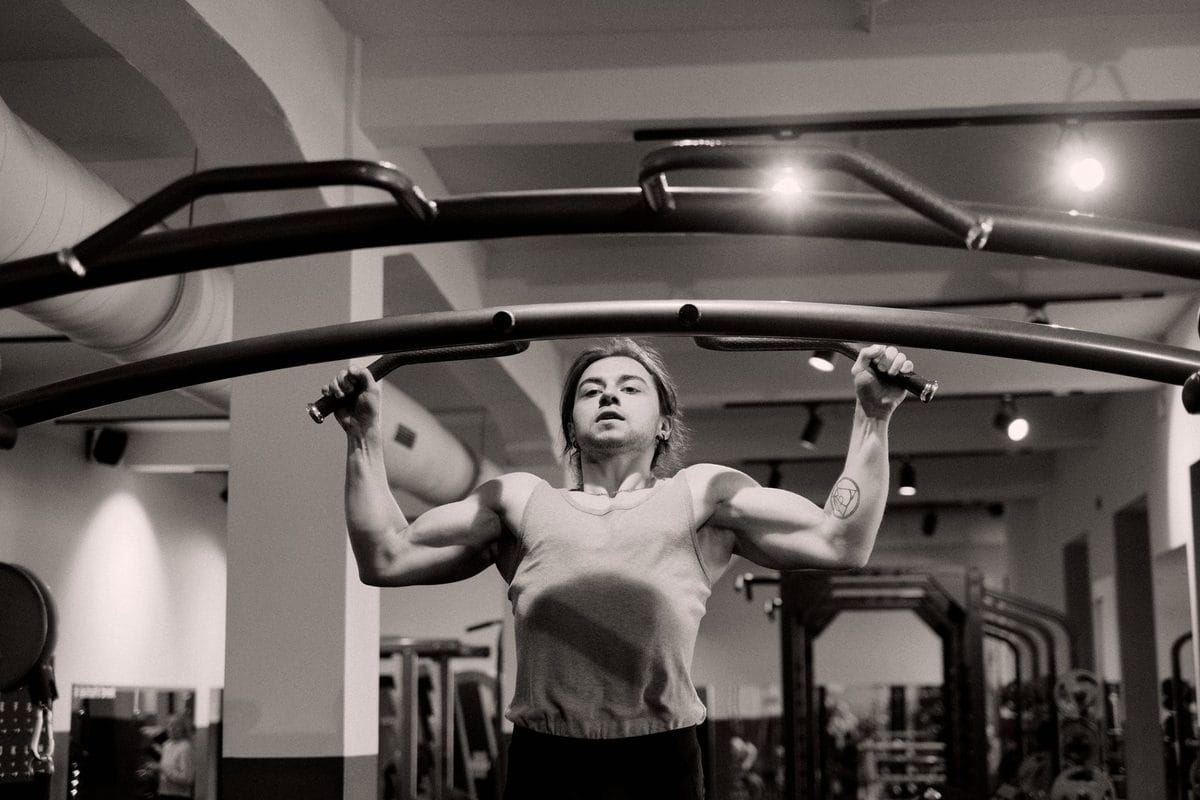
The first time I hung off a bar with the goal of pulling myself over it, I made it about two inches. My arms shook, my shoulders had no idea what was being asked of them, and I dropped off feeling like the whole project was hopeless. That was four months before I did my first clean rep. The gap between those two days wasn't talent or some secret. It was a plan that treated the pull-up as a skill to be built in pieces, not a test I either passed or failed.
Here's the thing almost nobody tells women at the start: the pull-up is trainable, and the path is boringly predictable once you stop randomly dangling from the bar hoping today is the day. You don't need to be lighter, and you definitely don't need to spend six weeks doing assisted-machine reps that quietly teach your legs to do the work. You need to build the specific strength in the specific positions the movement demands.
Why the standard advice keeps women stuck
Walk into most gyms and the pull-up plan you'll get is the assisted pull-up machine, set to a counterweight, three sets of ten. It feels productive. The problem is that the machine pushes you up through the hardest part with a flat, even assist, so you never learn to control the bottom of the rep, which is exactly where a real pull-up gets stuck. Plenty of women grind that machine for months and then try a bar and find they've made almost no transfer.
Resistance bands looped over the bar have the same flaw in reverse. The band gives you the most help at the bottom, where you're weakest, and the least at the top, where you're already strong. So you build a movement that is backwards from the one you're chasing. Bands are fine as one tool late in the process, but starting there is why so many people plateau six inches short and assume their body just won't do it.
The fix is to train the three positions that actually build a pull-up: the hang, the pull, and the top. Each one gets its own focused work, and together they're what carry you over the bar.
The three pieces, and how to train each one
1. The dead hang (your grip and your shoulders)
Before you can pull, you have to be able to hold on and keep your shoulders engaged rather than letting them shrug up around your ears. The dead hang trains both. Grab the bar slightly wider than shoulder width, palms facing away, and just hang with your arms straight and your shoulder blades pulled down and slightly back, like you're tucking them into your back pockets.
Start with whatever you've got, even if it's eight seconds. Build toward three sets of a 30-second hold. Most women find their grip gives out long before anything else at first, and that's normal. Grip is the easiest thing on this list to improve, and it improves fast: a few weeks of consistent hangs and you'll go from white-knuckling ten seconds to comfortably holding half a minute.
2. The negative (the single best builder)
If you only have time for one exercise, make it the negative, also called the eccentric. You get yourself to the top position, chin over the bar, by jumping or stepping up off a box, and then you lower yourself down as slowly as you possibly can. Your muscles are far stronger lowering a load than lifting it, which means you can train at the top end of the pull-up's range long before you can lift yourself through it.
Aim for a lower that takes five seconds, then build toward eight to ten. Do three to five singles with a full rest in between. This is where the real strength gets built, and it's the part people skip because going slow on the way down is genuinely uncomfortable. Lean into the discomfort here. A controlled five-second negative two or three times a week is the closest thing to a cheat code this whole process has.
3. The horizontal row (your back and the bottom of the rep)
The bottom of a pull-up, that first few inches where you're hanging straight and trying to initiate the pull, is the hardest position for most beginners. Horizontal rowing builds it. Set a barbell in a rack at hip height, or use a TRX or rings, lie underneath, and pull your chest to the bar with your body in a straight line. The more horizontal you are, the harder it is, so you can dial the difficulty up by walking your feet forward.
Three sets of eight to twelve, twice a week. Inverted rows like these directly train the lats and mid-back that drive a pull-up, and unlike the assisted machine, they teach you to start the movement under your own power.
A week that actually fits a life
You don't need a dedicated pull-up program eating your whole week. Two focused sessions, bolted onto whatever else you're doing, is enough. Here's a structure that's worked for me and the women I've trained:
- Session A: 3 dead hangs (build the hold time), then 3 to 5 slow negatives, then 3 sets of inverted rows.
- Session B: 3 sets of inverted rows at a harder angle, then 3 negatives, then a couple of sets of band-assisted pulls once you're a few weeks in to practise the full path.
- Keep at least two days between the sessions so the eccentric work has time to recover, because negatives leave you sore in a way that surprises people the first time.
Progress comes from nudging one variable each week: a slightly longer hang, a slightly slower negative, a slightly harder row angle. That's it. Don't add everything at once, and don't test for a full rep every single session. Pull testing too often just gives you repeated near-misses that wear down your motivation.
The mistakes that cost you months
I lost time to a few of these, so consider this the shortcut. First, ignoring grip until it becomes the limiter, then wondering why you can't hold on long enough to pull. Train it early. Second, kipping, that whippy hip-swing crossfit motion, before you have a strict pull. Kipping is a real skill, but using it to fake reps before you've built the strength underneath just delays the honest version and is rougher on your shoulders.
Third, and this one's sneaky: doing the work but eating in a way that leaves you under-fuelled and under-recovered. Strength gains need protein and sleep, full stop. If you're aggressively dieting at the same time you're trying to add a hard new strength skill, the skill will come slowly or not at all. There's a real tension here that the fitness internet glosses over: you can build a pull-up or you can be in a steep calorie deficit, but doing both at full intensity at once fights itself. Pick the one that matters more this month.
How long it really takes
An honest timeline, assuming you're training twice a week and recovering properly: most women who start from a solid dead hang and a few rows get their first strict pull-up somewhere between two and five months. If you're starting from zero grip strength and have never done any pulling, it can take longer, and that's completely fine. The number on the calendar matters far less than the fact that you'll watch your negatives get slower and your hangs get longer week over week, which is the proof it's working long before the rep shows up.
The morning it finally happens, you'll be halfway up before you realise you're not going to stall. One rep. Then a few weeks later, two. Get the first one and the whole thing stops feeling like a wall and starts feeling like a number you can add to.