Most women who lift weights for a few months eventually ask the same question at the protein shelf: is this tub worth the money, or is the chicken breast I already eat enough? The honest answer depends less on the powder and more on how much protein you eat across the whole day and whether you spread it out. Get those two things right and the supplement question becomes a matter of convenience.
How much protein an active woman needs
The Dietary Reference Intake for protein is 0.8 grams per kilogram of body weight per day. That figure prevents deficiency in a sedentary adult, and it was never designed as a target for someone training four times a week. The International Society of Sports Nutrition, in its 2017 position stand, recommends roughly 1.4 to 2.0 grams per kilogram per day for most physically active people, with the upper end more useful when you are in a calorie deficit or training hard.
For a woman weighing 65 kilograms, that works out to somewhere between about 90 and 130 grams a day. That is a real amount of food. A 170-gram portion of cooked chicken breast gives roughly 50 grams, and a cup of Greek yoghurt adds around 20. If you are eating 60 grams a day and training regularly, you are probably under target, and no amount of creatine will fix that.
Older women need a different calculation. The PROT-AGE group's 2013 consensus recommends 1.0 to 1.2 grams per kilogram for adults over 65, because muscle becomes harder to maintain with age. If you are in your fifties or sixties and training, use the higher range rather than the standard figure.
Timing matters less than total intake, with one exception
The old advice to drink a shake within 30 minutes of training has been largely dropped. Research on protein timing points to total daily intake as the main driver of muscle gain and maintenance, with the post-workout window far less important than people were led to believe. The exception is distribution across the day. Spreading protein over three or four meals works better than eating most of it at dinner.
The current evidence suggests that roughly 0.4 grams per kilogram per meal is a sensible target for most people. For a 65-kilogram woman, that is about 25 to 30 grams per meal. Many women who eat a light breakfast and a large dinner get far less protein in the morning than they need, and that is the pattern worth fixing first.
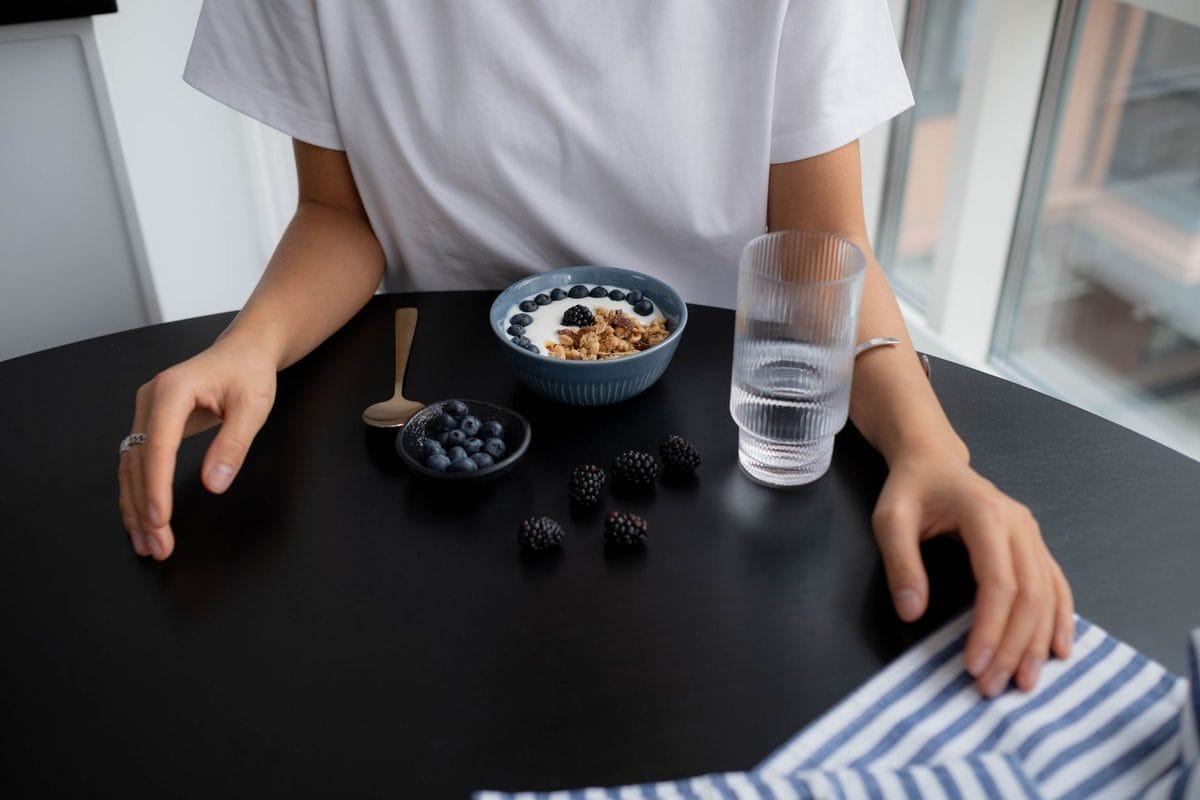
Breakfast is the easy place to start. Two eggs and a 150-gram tub of Greek yoghurt gets you to around 30 grams before you've finished your coffee. Oats with a scoop of protein powder work, but a plain bowl of porridge does not.
Is protein powder worth buying?
Whey protein is the most studied supplement in sports nutrition, and it is a convenient way to add 20 to 25 grams to a meal or snack. It is not a magic product. A scoop of whey from a well-known brand, such as Optimum Nutrition Gold Standard or Myprotein's standard whey, often works out cheaper per gram of protein than fresh meat, depending on the brand and the sale price, which is why it appeals to people trying to hit a number. For women who find it hard to eat enough protein from food, it is useful.
For most people, though, food should come first. Whole foods give you micronutrients, fibre and the satiety that comes from chewing, and a protein shake does not replace a meal you actually sit down to eat. If you are buying powder to avoid cooking, buy a different powder: a shake that replaces dinner is not the same as one that tops up a day that is already close to target.
If you eat mostly plant foods, the target does not change, but the arithmetic does. Lentils, tofu and tempeh each carry protein, yet a cup of cooked lentils gives roughly 18 grams against the 30 or more from a serving of chicken, so the same daily total needs more volume and more planning. Eggs, milk and yoghurt are the easiest way to close the gap for vegetarians. Vegans usually need to eat a larger total and combine two or three protein sources across the day to get enough of the essential amino acids.
Plant protein is a reasonable choice if you avoid dairy, but the blend matters. Pea protein on its own has a lower leucine content than whey, so you will need a slightly larger serving or a blend with rice or soy to match the same muscle-building effect.
Signs you are eating too little, and when to check with a doctor
Low protein intake shows up in slow recovery, persistent soreness that doesn't ease, hair thinning and an appetite that never quite settles. None of those symptoms are specific to protein, so don't use them to diagnose yourself. If you are losing strength across several weeks despite consistent training, log your food for a week before you blame the program.
People with chronic kidney disease, or those who have been told to limit protein for another medical reason, should not follow these ranges without speaking to their doctor. For healthy women, the upper end of the active range is generally considered safe, but it is worth having a baseline blood test if you have a family history of kidney problems.
The simplest test is the one most women skip: write down what you ate yesterday and count the protein. The number is usually lower than you expected, and fixing it takes two changes, not a new supplement regime.